
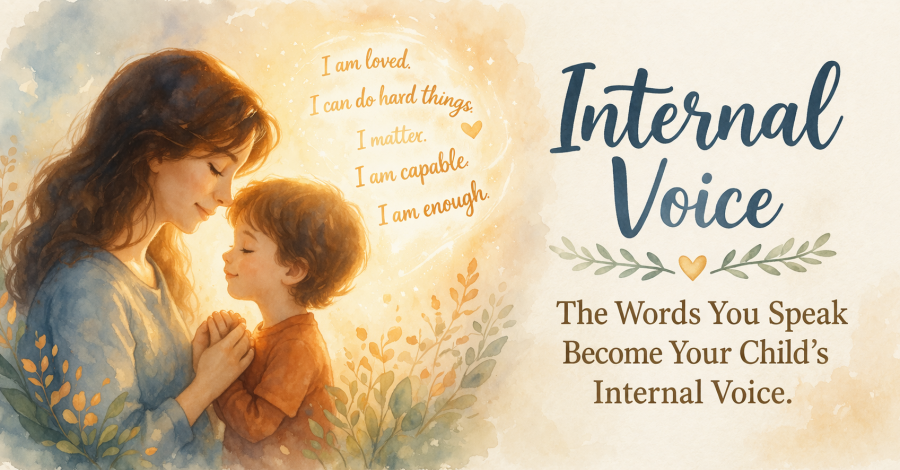
The Words You Speak Become Your Child’s Internal Voice
Why Every Word Matters in Shaping a Child’s Identity
We often underestimate the power of everyday language, yet the words we consistently speak to our children become the foundation of their inner dialogue. Over time, those repeated phrases evolve into the voice they carry within themselves-guiding their decisions, shaping their confidence, and influencing how they respond to life’s challenges.
Children do not separate tone from truth. What we say becomes what they believe. When we speak with intention, we are not merely communicating-we are building identity, resilience, and emotional security.
The internal voice a child develops is not accidental. It is formed, reinforced, and sustained by the language they hear most often-especially from those they trust the most.
The Science Behind Internal Dialogue and Emotional Development
A child’s brain is highly receptive, particularly during early developmental years. Neural pathways are formed through repetition, meaning that words spoken frequently become embedded patterns of thought. These patterns later manifest as beliefs about self-worth, capability, and belonging.
When a child hears:
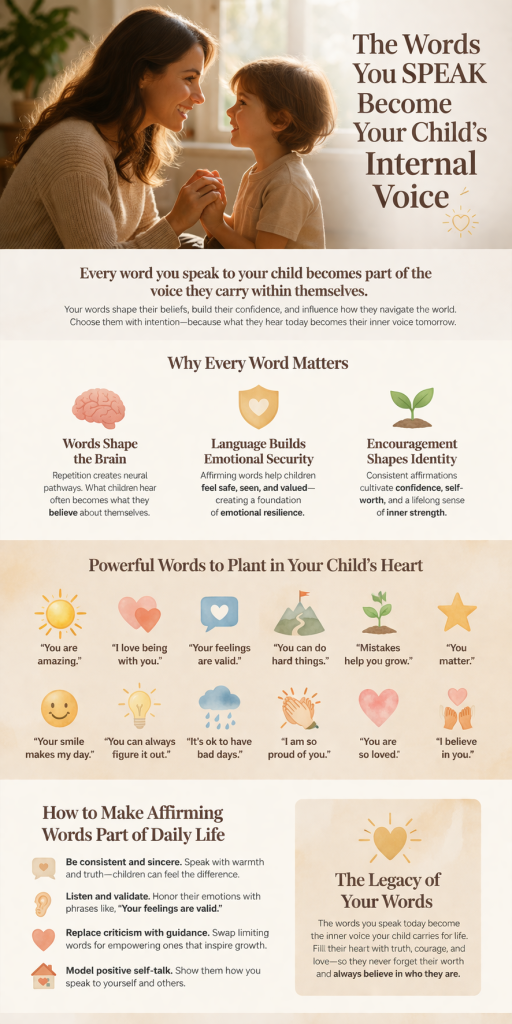
- “You can do hard things.”
- “I believe in you.”
These are not just comforting phrases—they are neurological imprints that shape perseverance and confidence.
Conversely, negative or dismissive language can create internal barriers that limit growth. That is why intentional, affirming communication is not optional-it is essential for healthy psychological and emotional development.
Positive Words Create Emotionally Secure Children
Children thrive in environments where they feel seen, valued, and understood. Affirming language provides emotional safety, allowing them to explore, learn, and grow without fear of rejection.
Consider the impact of saying:
- “Your feelings are valid.”
This teaches emotional awareness and acceptance. - “It’s okay to have bad days.”
This normalizes struggle and reduces shame. - “You matter.”
This establishes intrinsic worth that is not dependent on performance.
These statements are powerful because they communicate unconditional acceptance, which is the cornerstone of emotional resilience.
The Long-Term Impact of Encouraging Language
What we say today echoes into adulthood. The child who consistently hears:
- “I am so proud of you.”
- “You are amazing.”
- “You are so loved.”
will likely grow into an adult who:
- Trusts their abilities
- Maintains healthier relationships
- Demonstrates self-compassion
- Faces challenges with courage
Encouraging language becomes a lifelong internal resource, guiding decisions and shaping behavior long after childhood.
Building Confidence Through Daily Affirmations
Confidence is not built through occasional praise; it is developed through consistent, intentional reinforcement. When we integrate affirmations into daily interactions, we create a steady stream of encouragement that strengthens a child’s sense of self.
Simple yet powerful phrases include:
- “You can always figure it out.”
Encourages problem-solving and independence. - “Mistakes help you grow.”
Reframes failure as opportunity. - “Your smile makes my day.”
Reinforces positive identity and emotional connection.
These affirmations, when repeated over time, become internal truths rather than external compliments.
Transforming Challenges into Growth Opportunities
Children inevitably face difficulties-academic struggles, social conflicts, emotional setbacks. The language we use during these moments determines whether they feel defeated or empowered.
Instead of focusing on outcomes, we emphasize effort, growth, and resilience:
- “You can do hard things.”
- “I believe in you.”
These statements shift the child’s mindset from limitation to possibility. They begin to internalize the belief that challenges are temporary and growth is achievable.
Creating a Home Filled with Empowering Language
A child’s environment plays a crucial role in shaping their internal voice. When the home is filled with intentional, affirming language, it becomes a space where confidence and emotional health flourish.
We cultivate this environment by:
- Speaking with consistency and sincerity
- Listening actively and validating emotions
- Replacing criticism with constructive guidance
- Modeling positive self-talk in our own lives
Children learn not only from what we say to them, but from how we speak about ourselves and others. Our example becomes their template.
The Role of Connection in Strengthening Internal Voice
Words are most powerful when paired with genuine connection. Eye contact, tone, and presence amplify the impact of what we say. When a child hears:
- “I love being with you.”
they are not only receiving affirmation-they are experiencing belonging and acceptance.
Connection ensures that our words are not just heard, but deeply felt and internalized.
Replacing Negative Patterns with Intentional Language
Every parent and caregiver occasionally speaks out of frustration or fatigue. What matters is our willingness to correct and redirect our language patterns.
We replace limiting phrases with empowering ones:
- Instead of: “You always mess things up”
We say: “Mistakes help you grow.” - Instead of: “You can’t do this”
We say: “You can do hard things.” - Instead of dismissing emotions
We say: “Your feelings are valid.”
This intentional shift transforms the child’s internal narrative from self-doubt to self-belief.
How Words Shape Future Relationships and Leadership
Children who grow up hearing affirming language are more likely to:
- Communicate effectively
- Show empathy toward others
- Develop strong leadership qualities
- Build healthy, respectful relationships
Their internal voice becomes a guide rooted in confidence and compassion, enabling them to navigate life with clarity and strength.
The Legacy of Words: What We Leave Behind
Our words outlive the moment in which they are spoken. They become part of the child’s emotional and psychological inheritance.
When we consistently say:
- “You are amazing.”
- “You matter.”
- “I believe in you.”
- “You are so loved.”
we are leaving behind more than memories-we are creating a legacy of strength, confidence, and unconditional love.
Conclusion: Speak Life, Build Identity, Shape the Future
Every word we speak has the power to either build or break. When we choose language that affirms, encourages, and uplifts, we actively shape a child’s internal voice into one that speaks truth, courage, and self-worth.
We do not wait for special moments to affirm our children-we make it part of everyday life. Through intentional words, we cultivate confident individuals who are equipped to face life with resilience and purpose.
The voice they carry within them tomorrow is being formed by what we say today.
Discover more from Dr Maria Barbosa
Subscribe to get the latest posts sent to your email.