
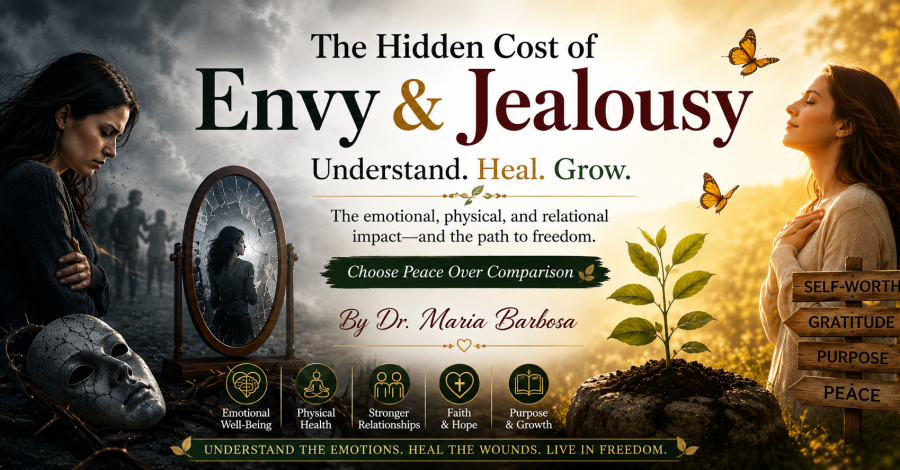
Understanding the Emotional, Physical, Relational, and Spiritual Impact
By Dr. Maria P. Barbosa
Introduction
Envy and jealousy are among the most powerful and destructive human emotions. When left unaddressed, they can negatively affect emotional well-being, physical health, relationships, families, workplaces, churches, and entire communities. Although many cultures associate misfortune with the concept of the “evil eye,” psychology and medicine recognize that envy and jealousy primarily influence lives through attitudes, behaviors, chronic stress, and unhealthy relationship dynamics-not through supernatural forces.
Understanding these emotions is the first step toward healing. When we identify their true roots, we can replace comparison with contentment, insecurity with confidence, and emotional pain with purpose.
Understanding the Difference
Although the terms are often used interchangeably, envy and jealousy describe different emotional experiences.
Envy is the desire to possess something another person has, such as beauty, success, recognition, wealth, opportunities, talents, or relationships.
Jealousy is the fear of losing something valuable-such as a relationship, position, reputation, or attention-to someone else.
Both emotions are natural human experiences. However, when they become chronic, obsessive, or begin controlling thoughts and behavior, they become emotionally destructive.
The Hidden Roots of Envy and Jealousy
Most people assume envy begins because someone else is more successful. In reality, these emotions usually develop from unresolved personal wounds.
Common underlying causes include:
- Low self-esteem
- Childhood rejection or neglect
- Emotional abandonment
- Feelings of inadequacy
- Fear of failure
- Fear of abandonment
- Constant comparison with others
- Unresolved trauma
- Lack of personal identity or purpose
- The need for approval and validation
- Scarcity thinking (“If someone else succeeds, there is less available for me.”)
- Perfectionism
- Shame
- Unforgiveness
- Bitterness
Envy often reveals more about the emotional pain of the individual experiencing it than about the person they envy.
Emotional Consequences
Persistent envy and jealousy gradually affect emotional health.
Individuals may experience:
- Chronic dissatisfaction
- Anger
- Resentment
- Bitterness
- Anxiety
- Depression
- Obsessive thoughts
- Constant comparison
- Low self-worth
- Loss of joy
- Emotional exhaustion
- Isolation
- Difficulty celebrating the success of others
Instead of pursuing personal growth, the individual becomes consumed with measuring their life against someone else’s.
Physical Consequences
Emotional stress affects the body as well as the mind.
Long-term envy and jealousy may contribute to:
- Elevated stress hormones
- High blood pressure
- Headaches
- Muscle tension
- Chronic fatigue
- Digestive problems
- Sleep disturbances
- Reduced immune function
- Increased inflammation
- Greater risk of cardiovascular disease over time
These conditions are linked to chronic emotional stress rather than envy directly causing disease.
Behavioral Consequences
When envy remains unresolved, it often influences behavior in harmful ways.
These behaviors may include:
- Gossip
- Character assassination
- Passive-aggressive behavior
- Manipulation
- Excessive criticism
- Social exclusion
- Sabotaging others
- Controlling behavior
- Damaging relationships
- Lack of trust
- Emotional intimidation
These actions hurt both the individual acting from envy and the people around them.
The Hidden Cost to the Victim
The emotional damage does not affect only the person experiencing envy. Those who become the targets often suffer as well.
Victims may experience:
- Confusion
- Anxiety
- Emotional exhaustion
- Stress
- Loss of confidence
- Self-doubt
- Workplace conflict
- Family conflict
- Damage to their reputation through gossip or false accusations
- Social isolation
- Difficulty trusting others
Some eventually minimize their accomplishments simply to avoid criticism or resentment.
No one should feel guilty for living out their gifts, talents, or success.
Healthy Ways to Respond
If you become the target of another person’s envy or jealousy:
- Remain calm and respectful.
- Refuse to retaliate.
- Establish healthy boundaries.
- Limit unnecessary conflict.
- Protect your emotional well-being.
- Continue living according to your values.
- Seek support from trusted friends, counselors, mentors, or faith leaders.
- Never allow another person’s insecurity to define your identity or self-worth.
You cannot control another person’s emotions, but you can control your own response.
Healing Begins Within
Healing starts with honest self-reflection.
Ask yourself:
- What am I truly longing for?
- Why does another person’s success bother me?
- What emotional wound still needs healing?
- Am I comparing my life instead of developing my own purpose?
Practical steps toward healing include:
- Practicing gratitude daily
- Developing healthy self-esteem
- Celebrating the success of others
- Reducing unhealthy comparison
- Seeking professional counseling when needed
- Creating personal goals based on your own values
- Learning contentment
- Discovering your God-given purpose
Growth begins when comparison ends.
A Christian Perspective
Scripture repeatedly warns against envy because it destroys peace, relationships, and spiritual growth.
Instead, God calls believers to live with:
- Gratitude
- Humility
- Love
- Compassion
- Kindness
- Contentment
God’s blessings are never limited. Another person’s success does not diminish your value or your calling.
Each person has unique gifts, talents, and a divine purpose that cannot be replaced by anyone else.
True peace comes not from competing with others but from becoming the person God created you to be.
Key Scripture
“A heart at peace gives life to the body, but envy rots the bones.” — Proverbs 14:30 (NIV)
This verse serves as the central message of this article. It reminds us that emotional peace promotes health, while envy silently damages our hearts, minds, relationships, and even our physical well-being. God invites us to replace comparison with contentment, jealousy with gratitude, and insecurity with confidence in our identity in Christ.
How Get Up And Go Holistic Therapy Can Help
Many people believe envy and jealousy are the problem. In reality, they are often symptoms of something much deeper.
Unresolved childhood trauma, rejection, shame, fear of abandonment, insecurity, emotional neglect, and a lack of identity frequently lie beneath these destructive emotions.
Get Up And Go Holistic Therapy by Dr. Maria P. Barbosa provides a practical holistic framework for identifying and healing these underlying emotional wounds.
Rather than simply teaching readers how to manage emotions, the book guides them toward understanding why those emotions exist and how lasting healing can occur.
Through the principles of holistic therapy, readers learn to:
- Identify the emotional roots of envy and jealousy.
- Recognize how childhood experiences shape adult behavior.
- Heal unresolved emotional wounds.
- Replace comparison with gratitude and self-worth.
- Develop emotional intelligence and self-awareness.
- Build healthy personal and relational boundaries.
- Strengthen emotional resilience.
- Improve mental, emotional, physical, relational, and spiritual wellness.
- Discover their unique God-given identity and purpose.
- Grow in forgiveness, compassion, confidence, and emotional maturity.
For individuals who have become the targets of another person’s envy or jealousy, the book also provides practical guidance for:
- Understanding that another person’s jealousy often reflects unresolved personal pain.
- Refusing to internalize criticism or false accusations.
- Establishing healthy emotional boundaries.
- Rebuilding confidence and self-esteem.
- Healing from emotionally toxic relationships.
- Responding with wisdom rather than fear, anger, or retaliation.
One of the central messages of Get Up And Go Holistic Therapy is that emotional healing begins with self-awareness. When individuals understand the true source of their emotional struggles, they become empowered to break destructive cycles, build healthier relationships, and experience lasting transformation.
Final Thoughts
Envy and jealousy are not signs of weakness-they are emotional signals that something deeper may need attention and healing.
Likewise, those who become the targets of envy deserve compassion, healthy boundaries, and encouragement rather than fear or retaliation.
A fulfilling life is not built on comparison but on gratitude, emotional maturity, purpose, faith, and respect for both yourself and others.
When comparison is replaced with purpose, envy gives way to contentment. Jealousy is replaced by confidence. Emotional wounds begin to heal, relationships become healthier, and lives are transformed.
True healing begins when we stop asking, “Why do they have what I don’t?” and start asking, “How can I become the healthiest version of the person God created me to be?”
You find this book written in English, Spanish and Portuguese
https://www.booksamillion.com/p/Get-Up-Go-Holistic-Therapy/Maria-Pinto-Barbosa/9798309033713
Disclaimer: This article is provided for educational, informational, and personal reflection purposes only. It is not intended to replace professional medical, psychological, legal, or counseling advice. Always seek guidance from a qualified professional regarding your individual needs.
Discover more from Dr Maria Barbosa
Subscribe to get the latest posts sent to your email.