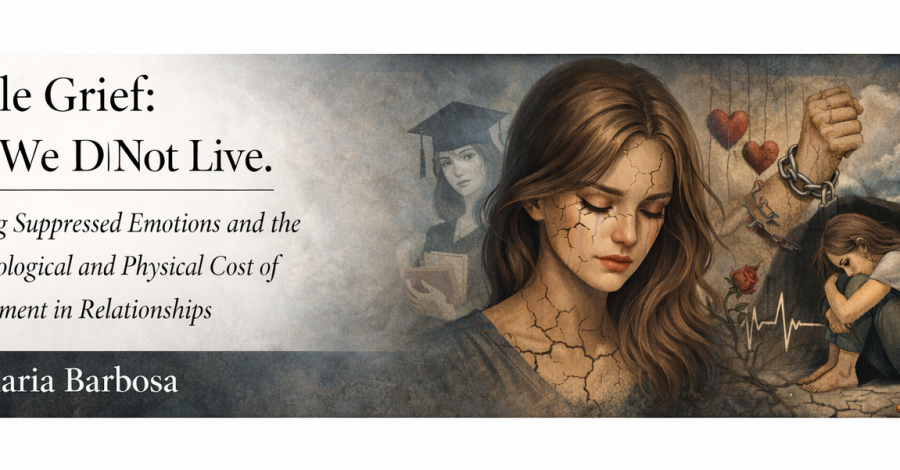
Understanding Suppressed Emotions and the Hidden Psychological and Physical Cost of Self-Abandonment in Relationships
What Are Suppressed Emotions? A Deep Psychological Overview
Suppressed emotions are psychological experiences that we consciously or unconsciously push aside instead of processing, expressing, and integrating them. These emotions often include anger, disappointment, sadness, resentment, fear, humiliation, ambition, and personal longing. When we repeatedly silence these feelings, they do not dissolve. They accumulate beneath awareness, shaping behavior, identity, and health.
We must understand that emotional suppression is not passive. It is an active internal process that requires psychological energy. Over time, this internal tension creates invisible grief – grief for the unlived life, the abandoned dreams, and the silenced identity.
When we deny our personal ambitions to maintain a relationship, we begin a pattern of self-abandonment. This pattern gradually restructures our self-perception, erodes confidence, and destabilizes emotional regulation.
Self-Abandonment in Relationships: The Silent Identity Erosion
When a young woman stops pursuing her education, professional growth, or personal aspirations due to relational pressure, the consequences extend far beyond career limitations. Education and career development are deeply connected to identity formation, autonomy, competence, and psychological independence.
We often observe that when personal growth is sacrificed for approval, several emotional patterns emerge:
- Loss of identity
- Erosion of confidence
- Financial dependency anxiety
- Chronic self-doubt
- Unspoken resentment
- Fear of abandonment
At first, the sacrifice may feel like devotion. Over time, however, internal conflict surfaces:
- “Who would I have become?”
- “Why did I give up my dreams?”
- “I no longer recognize myself.”
This is not simply regret. It is identity grief. It is the mourning of potential.
The Long-Term Psychological Impact of Suppressed Emotions
When suppressed emotions remain unresolved for years, they transform into complex attachment patterns that distort relational dynamics.
1. Resentment Attachment
We see emotional bonding to the narrative of sacrifice. The individual identifies as the one who “gave everything.” This narrative reinforces bitterness, even if it remains silent.
2. Approval Dependency
When identity becomes anchored in pleasing a partner, anxiety around disapproval intensifies. Self-worth becomes externally regulated.
3. Financial Control Trauma
If one partner controls financial resources and denies access, dependency evolves into fear-based attachment. This dynamic resembles trauma bonding and undermines dignity.
4. Internalized Anger
Unexpressed anger does not vanish. It becomes depression, passive-aggressive behavior, emotional numbness, or irritability.
Over time, suppressed emotions reshape self-concept and destabilize emotional equilibrium.
The Hidden Emotional Cost of Financial Dependence
One of the most psychologically damaging experiences occurs when a woman must ask for money for basic needs and receives refusal.
Behind that moment are layers of emotional injury:
- Humiliation
- Shame
- Powerlessness
- Invisibility
- Internalized worthlessness
- Fear of conflict
- Suppressed anger
Financial denial is rarely about money alone. It communicates hierarchy and control. When repeated, it conditions submission and erodes self-respect.
Eventually, many women stop asking – not because needs disappear, but because entitlement to those needs feels invalidated.
This is emotional suppression at its most corrosive level.
From Emotional Suppression to Physical Illness
The body absorbs what the voice does not express.
Chronic emotional suppression activates prolonged stress responses. Sustained cortisol elevation disrupts immune regulation and inflammatory balance. Research consistently links long-term suppression with:
- Hormonal imbalances
- Chronic fatigue
- Autoimmune disorders
- Digestive disturbances
- Tension headaches
- Insomnia
- Cardiovascular strain
When the nervous system remains in low-grade stress for years, physiological wear accumulates. Emotional pain gradually manifests as physical symptoms.
The connection between suppressed emotions and chronic illness is not symbolic – it is biological.
Emotional Imbalance and Mood Dysregulation
When internal emotions remain unprocessed, psychological pressure intensifies. This pressure eventually leaks through behavior and mood instability.
We often observe:
- Irritability
- Anxiety attacks
- Emotional outbursts
- Chronic sadness
- Emotional numbness
- Loss of joy
- Depressive patterns
Suppression demands constant self-monitoring. Over time, emotional regulation weakens, and stability declines.
Ironically, the partner may then criticize emotional instability without recognizing the long-standing suppression that created it.
Why Relationships Weaken After Self-Sacrifice
There is a painful paradox in relational psychology. When one partner sacrifices identity to preserve the relationship, attraction often declines.
Attraction thrives on:
- Vitality
- Independence
- Intellectual engagement
- Personal growth
- Self-respect
When individuality shrinks, admiration fades. Without self-admiration, relational admiration weakens.
We frequently observe:
- Emotional intimacy declines
- Communication becomes transactional
- Sexual desire decreases
- Subtle disrespect increases
- Emotional distance grows
Relationships flourish through mutual expansion, not contraction. When one person reduces herself, the relational dynamic contracts as well.
The Psychological Identity Collapse
Long-term suppression leads to identity fragmentation. Years of self-silencing weaken decision-making confidence and future orientation.
Common internal beliefs develop:
- “It’s too late for me.”
- “I’m not capable anymore.”
- “I wouldn’t survive independently.”
- “I have no direction.”
These beliefs are not truths. They are consequences of prolonged suppression and dependency conditioning.
The tragedy of invisible grief is not only what was lost – it is the internal belief that rebuilding is impossible.
Reclaiming Identity: The Path to Emotional Restoration
Healing begins with acknowledgment. Suppressed emotions must be recognized without shame.
Restoration includes:
- Re-engaging educational or professional goals
- Building financial literacy and autonomy
- Establishing emotional boundaries
- Developing new competencies
- Seeking therapeutic support
- Reconnecting with forgotten passions
- Rebuilding self-trust
When autonomy returns, the nervous system stabilizes. Confidence gradually re-emerges. Resentment decreases. Emotional balance improves. Physical symptoms often diminish as stress responses recalibrate.
Identity restoration is not rebellion. It is psychological stabilization.
Healthy Relationships Require Mutual Empowerment
A sustainable partnership does not require self-erasure. It requires shared power and respect.
Healthy relational structures include:
- Financial transparency
- Mutual decision-making
- Encouragement of education and career development
- Emotional safety
- Respect for individuality
- Support for personal growth
When both partners expand, the relationship strengthens. When one partner shrinks to maintain harmony, emotional suppression becomes inevitable.
Mutual empowerment sustains attraction, respect, and intimacy.
Invisible Grief: Mourning the Life Not Lived
Invisible grief is the mourning of potential. It is the quiet sorrow of dreams deferred, ambitions silenced, and identity compressed.
We must recognize that suppressed emotions accumulate interest over time. They compound into:
- Resentment
- Identity confusion
- Health deterioration
- Relational instability
- Loss of self-respect
The cost of suppression is cumulative.
Autonomy is not selfish. Growth is not disloyal. Education is not betrayal. Financial independence is not rejection.
They are pillars of psychological stability.
When we reclaim suppressed parts of ourselves, we restore dignity. When we honor ambition, we reduce internal conflict. When we express emotion, we reduce physiological strain.
The life not lived does not have to remain a permanent loss. Re-engagement with personal purpose transforms invisible grief into visible growth.
Emotional health requires expression. Identity requires expansion. Relationships require equality.
The cost of self-abandonment is too high – but restoration remains possible at any stage of life.
Emotional Freedom – Breaking free from past hurts and stepping into a new life of confidence and self-acceptance.
Dr. Maria Pinto Barbosa is a life coach, Clinical Christian Counselor, and educator. She is the founder of ACCEL Educational Leadership and the creator of the Get-Up-and-Go Holistic Therapy method, helping individuals heal, grow, and reclaim their emotional and spiritual well-being.
Discover more from Dr Maria Barbosa
Subscribe to get the latest posts sent to your email.