
“Happiness depends upon ourselves.”
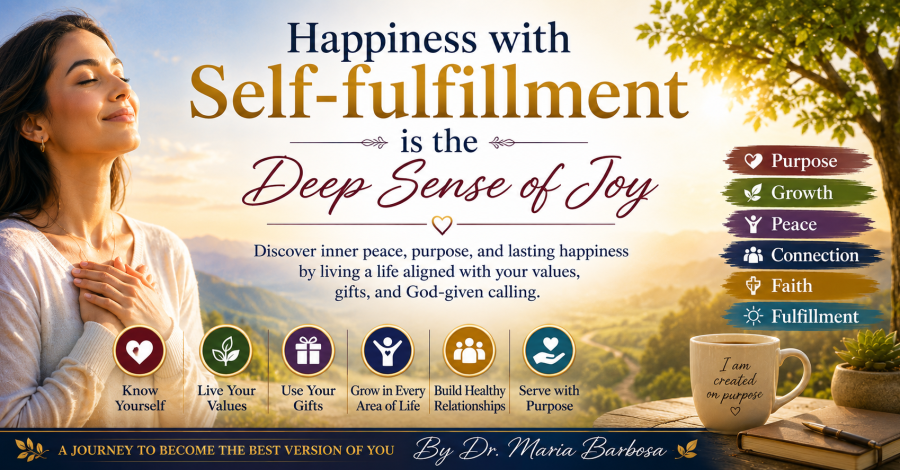
Happiness with self-fulfillment is the deep sense of joy, peace, and satisfaction that comes from living a life aligned with your values, purpose, and potential. It goes beyond temporary pleasure or success because it comes from within rather than from external circumstances.
By Dr. Maria P. Barbosa
Introduction
Why Do So Many People Struggle to Find Happiness and Self-Fulfillment?
Many people spend their lives searching for happiness, believing it can be found through success, possessions, recognition, or the approval of others. While these experiences may bring temporary pleasure, lasting happiness comes from something much deeper: self-fulfillment.
True self-fulfillment is the deep sense of joy, peace, and satisfaction that comes from living a life aligned with your values, purpose, and God-given potential. It is an inner condition rather than an external achievement.
However, one of the greatest misconceptions is believing that serving others always leads to fulfillment. While serving is one of life’s highest callings, it becomes unhealthy when it is used to avoid our own emotional wounds or when we sacrifice ourselves in the process.
What Is Happiness with Self-Fulfillment?
Happiness and self-fulfillment are closely connected, but they are not the same.
Happiness is often an emotional experience that changes with life’s circumstances.
Self-fulfillment is a lasting sense of purpose, peace, and contentment that comes from becoming the person you were created to be.
A person may experience loss, disappointment, or hardship and still feel fulfilled because they know their life has meaning and direction.
Self-fulfillment includes:
- Knowing who you are and accepting yourself.
- Living according to your values and beliefs.
- Using your gifts, talents, and abilities in meaningful ways.
- Growing emotionally, intellectually, spiritually, and personally.
- Building healthy relationships while maintaining healthy boundaries.
- Contributing to the lives of others through kindness, service, and purpose.
- Living a life that reflects meaning, integrity, and direction.
True fulfillment comes from within-not from external success or the opinions of others.
“Happiness and self-fulfillment are not destinations-they are the result of healing the past, embracing the present, and living intentionally with courage, purpose, and gratitude.” — Dr. Maria P. Barbo
Why Some People Focus on Helping Others Instead of Healing Themselves
Helping others is beautiful and meaningful. However, for some individuals, constantly caring for others becomes an unconscious way of avoiding their own emotional pain.
Instead of facing unresolved wounds, they become so busy solving everyone else’s problems that they never address their own.
This pattern is often called emotional avoidance or self-neglect through caregiving.
Many people do not realize they are doing it.
Emotional Reasons Behind This Pattern
People may overextend themselves in helping others because of unresolved emotional wounds such as:
- Childhood neglect or abandonment
- Fear of rejection
- Low self-esteem
- Feeling responsible for everyone else’s happiness
- Fear of disappointing others
- A need for approval or validation
- Codependency
- Guilt
- Unresolved grief
- Trauma
- Feeling unworthy unless they are needed
Sometimes helping others temporarily distracts people from their own loneliness, anxiety, sadness, or emotional pain.
Although serving may feel rewarding, it cannot replace personal healing.
The Danger of Losing Yourself
Serving others should never require sacrificing your identity, your health, your peace, or your emotional well-being.
You cannot continue pouring into others if your own cup is empty.
Ignoring your own needs often leads to:
- Emotional exhaustion
- Compassion fatigue
- Burnout
- Anxiety
- Depression
- Resentment
- Loss of identity
- Chronic stress
- Physical illness
- Difficulty experiencing joy
Many caregivers eventually discover they have spent years taking care of everyone except themselves.
Healthy Service Begins with Healthy Boundaries
Serving others does not mean becoming responsible for everyone’s life.
Healthy service means offering compassion while recognizing that every person remains responsible for their own choices.
Healthy boundaries allow us to love others without losing ourselves.
Healthy service includes:
- Respecting your emotional limits.
- Resting when your body and mind need recovery.
- Saying “no” when necessary.
- Protecting your values and priorities.
- Allowing others to grow through personal responsibility.
- Recognizing that you cannot rescue everyone.
Boundaries do not make you selfish.
They make your love sustainable.
The Example of Jesus
Jesus demonstrated perfect compassion, yet He also modeled healthy boundaries.
Throughout His ministry He:
- Withdrew to pray.
- Rested.
- Spent time alone with the Father.
- Declined certain requests.
- Focused on His God-given mission.
- Loved people deeply without allowing the demands of others to control His purpose.
Jesus understood that caring for Himself spiritually allowed Him to continue serving others faithfully.
His example teaches us that self-care is not selfish-it is wise stewardship.
Living a Balanced Life
Healthy fulfillment comes from balancing three important relationships:
Your Relationship with God
Growing spiritually and discovering your God-given identity.
Your Relationship with Yourself
Healing emotional wounds, developing healthy self-worth, and caring for your physical, emotional, mental, and spiritual health.
Your Relationship with Others
Serving with compassion while maintaining healthy boundaries and encouraging personal responsibility.
When these relationships remain in balance, service becomes joyful rather than exhausting.
Practical Principles for Healthy Service
Remember:
- Give from your abundance, not from your exhaustion.
- Help others without becoming responsible for their choices.
- Love with compassion while maintaining healthy boundaries.
- Take time to rest and restore your emotional health.
- Do not neglect your own healing.
- Serve with joy rather than guilt or obligation.
- Value yourself as much as you value those you serve.
- Remember that your worth comes from who you are-not only from what you do for others.
A Christian Perspective
From a Christian perspective, self-fulfillment is not centered on self-interest but on becoming the person God created you to be.
It involves growing in faith, developing Christlike character, using your God-given gifts, and serving others with wisdom, love, and humility.
God never asks us to neglect ourselves while caring for others. Instead, He calls us to love our neighbors as we love ourselves, recognizing that healthy love includes both compassion for others and responsible care for ourselves.
When we care for our own emotional, physical, mental, and spiritual well-being, we are better equipped to serve others with authenticity, strength, and lasting joy.
Final Thoughts
Happiness with self-fulfillment is not found in endless achievement or constant sacrifice. It is found in becoming the healthiest version of yourself while living according to your values, your purpose, and God’s calling.
True fulfillment comes when you allow yourself to heal, grow, and serve from a place of wholeness rather than brokenness.
When your heart is healthy, your service becomes healthier. When your identity is secure, your relationships become stronger. And when your purpose is rooted in God, your happiness is no longer dependent on circumstances but on the lasting peace that comes from living the life He created you to live.
“You cannot pour from an empty cup. Heal yourself, honor your God-given worth, and then serve others from the overflow of a healthy heart.” Dr. Maria Barbosa
Disclaimer: This article is provided for educational, informational, and personal reflection purposes only. It is not intended to replace professional medical, psychological, legal, or counseling advice. Always seek guidance from a qualified professional regarding your individual needs.
Discover more from Dr Maria Barbosa
Subscribe to get the latest posts sent to your email.