
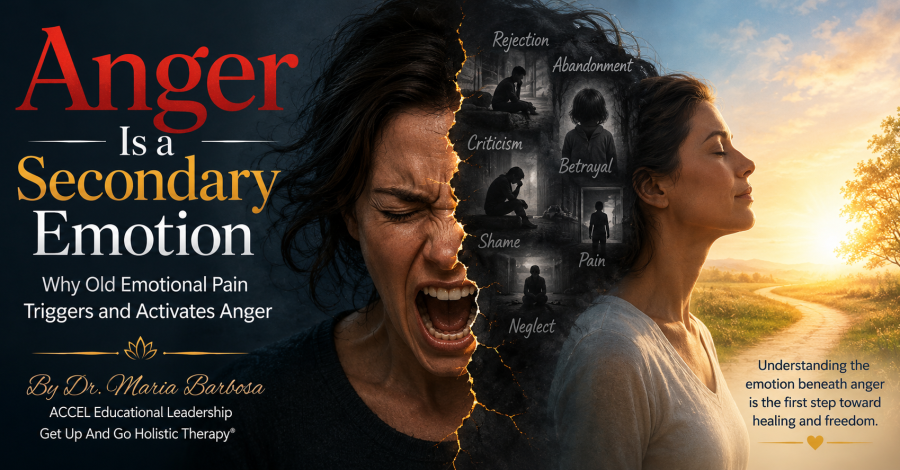
Anger Is a Secondary Emotion: Why Old Emotional Pain Triggers and Activates Anger
Anger is one of the most visible and misunderstood human emotions. It often appears suddenly, feels overwhelming, and can influence our thoughts, words, and actions within seconds. While many people believe anger is the primary emotional response to a difficult situation, research in psychology and neuroscience suggests otherwise. In many cases, anger is a secondary emotion-a protective reaction that develops in response to deeper emotional pain.
Beneath anger often lie emotions such as hurt, fear, rejection, disappointment, shame, sadness, loneliness, betrayal, helplessness, insecurity, or emotional vulnerability. These emotions can feel painful and difficult to express, so the brain instinctively uses anger as a defense mechanism. Anger creates the illusion of strength and control while shielding us from feelings that make us feel emotionally exposed.
Understanding anger is not about suppressing or eliminating it. Rather, it is about learning what anger is trying to protect and addressing the deeper emotional wounds that lie beneath the surface.
Understanding Primary and Secondary Emotions
A primary emotion is the first emotional response to an event. It is immediate, instinctive, and genuine. Examples include sadness after losing a loved one, fear when facing danger, or disappointment after experiencing failure.
A secondary emotion develops moments later as a reaction to that primary emotion. It serves as a psychological defense designed to reduce emotional discomfort.
For example:
- A child feels rejected by a parent.
- The child experiences emotional pain and sadness.
- Instead of expressing vulnerability, the child becomes angry.
- Over time, anger becomes the automatic response whenever rejection is experienced.
This pattern often continues throughout adulthood without the individual realizing that the anger is actually protecting unresolved emotional pain.
Why Old Emotional Pain Continues to Trigger Anger
One of the most important concepts in emotional healing is understanding that old emotional wounds do not disappear simply because time has passed.
When painful experiences remain unresolved, they become stored in our emotional memory and nervous system. Although we may no longer consciously think about the original event, the emotional imprint remains alive beneath our awareness.
The brain constantly compares present experiences with past experiences. When it detects similarities-even subtle ones-it automatically activates the emotions associated with the original event.
For example:
- Being ignored today may unconsciously remind someone of childhood emotional neglect.
- Constructive criticism at work may reactivate years of feeling inadequate.
- A disagreement with a spouse may trigger memories of growing up in a hostile home.
- Feeling excluded from a social gathering may awaken old wounds of rejection.
In these moments, anger is rarely about the present situation alone. Instead, the current event acts as a trigger that reopens an older emotional wound.
This explains why some reactions appear much stronger than the situation itself would seem to justify. The individual is responding to both the present event and unresolved emotional pain from the past.
How the Brain Activates Anger as a Protective Response
The human brain is designed for survival. Its primary responsibility is not happiness-it is protection.
Every second, the brain scans the environment for signs of danger based on previous life experiences. When it recognizes a familiar emotional threat, it activates the body’s survival system before the thinking part of the brain has time to evaluate whether the danger is real.
This automatic survival response is commonly known as:
- Fight
- Flight
- Freeze
- Fawn
Anger is part of the fight response.
Within seconds, the nervous system releases stress hormones, increasing:
- Heart rate
- Blood pressure
- Muscle tension
- Breathing rate
- Mental alertness
- Emotional intensity
This reaction prepares the body to defend itself. Although this response is helpful during genuine physical danger, it often becomes problematic when emotional memories are mistaken for present threats.
As a result, individuals may react with intense anger before fully understanding what they are actually feeling.
How Childhood Experiences Shape Adult Anger
Many adult anger patterns begin during childhood.
Children naturally experience sadness, fear, shame, disappointment, and loneliness. However, many grow up in environments where these emotions are ignored, criticized, or discouraged.
Common messages include:
- “Stop crying.”
- “You’re too sensitive.”
- “Be strong.”
- “Big boys don’t cry.”
- “You’ll get over it.”
- “Don’t make such a big deal out of it.”
Over time, children learn that vulnerable emotions are unacceptable.
Instead of expressing sadness or fear, they begin expressing anger because anger feels safer, stronger, and more socially accepted.
Without emotional healing, these learned patterns continue into adulthood, affecting marriages, parenting, friendships, leadership, and professional relationships.
Common Emotional Wounds That Trigger Anger
Many life experiences can leave lasting emotional wounds that continue to influence behavior years later.
These include:
- Emotional neglect
- Abandonment
- Rejection
- Bullying
- Betrayal
- Domestic violence
- Emotional abuse
- Physical abuse
- Sexual abuse
- Chronic criticism
- Humiliation
- Public embarrassment
- Loss of a loved one
- Divorce
- Relationship betrayal
- Growing up in an unpredictable or unsafe home
Each unresolved experience creates emotional “buttons” that remain sensitive until they are acknowledged and healed.
When these emotional wounds are triggered, the individual may unconsciously relive the same emotional pain experienced years earlier.
Anger then appears as a psychological shield that protects the individual from feeling vulnerable, powerless, or emotionally overwhelmed.
Signs That Anger Is Hiding Deeper Emotional Pain
Anger often masks emotions that feel more difficult to express.
Common signs include:
- Becoming defensive during criticism.
- Feeling unusually angry after rejection.
- Raising your voice quickly during disagreements.
- Becoming irritated when embarrassed.
- Blaming others instead of expressing hurt.
- Feeling emotionally exhausted after conflict.
- Repeating the same relationship arguments.
- Feeling misunderstood despite trying to explain yourself.
- Overreacting to relatively small situations.
- Becoming easily frustrated without understanding why.
These behaviors often indicate that unresolved emotional wounds are being activated.
The Long-Term Effects of Unresolved Anger
When emotional wounds remain untreated, anger can become a chronic pattern that affects every area of life.
Relationships
Persistent anger damages communication, trust, emotional intimacy, and psychological safety.
Loved ones often begin responding to the anger itself rather than the original emotional need.
Mental Health
Long-term unresolved anger has been associated with:
- Anxiety
- Depression
- Chronic stress
- Emotional exhaustion
- Low self-esteem
- Isolation
- Difficulty trusting others
Physical Health
Repeated activation of anger keeps the body in a prolonged stress response, increasing the risk of:
- High blood pressure
- Heart disease
- Sleep disorders
- Headaches
- Digestive problems
- Chronic muscle tension
- Fatigue
- A weakened immune system
The body remembers emotional pain even when the conscious mind has forgotten it.
Breaking the Cycle of Emotional Triggers
Healing begins when we realize that our emotional reactions are not always about the present moment.
Instead of asking:
“Why am I so angry?”
We can ask:
- What happened just before I became angry?
- What emotion am I trying not to feel?
- Does this situation remind me of something from my past?
- Am I feeling hurt, rejected, disappointed, ashamed, or afraid?
- What emotional need was not met?
These questions shift our attention from reacting to understanding.
As unresolved emotional wounds are processed, the brain gradually stops interpreting every similar situation as a threat.
The emotional trigger loses its power because the underlying pain has been acknowledged and healed.
Transforming Anger Into Emotional Growth
Anger is not the enemy. It is an emotional messenger pointing toward something deeper that requires attention.
Rather than judging anger, we can become curious about what it is protecting.
When we understand the emotional pain beneath our anger, we become better equipped to regulate our emotions, communicate honestly, establish healthy boundaries, and build stronger relationships.
Emotional healing does not happen by suppressing anger. Healing occurs when we courageously acknowledge the hurt, fear, rejection, shame, disappointment, or sadness that anger has been trying to protect all along.
Every emotional trigger becomes an opportunity-not simply to react-but to heal.
Final Thoughts
Anger is often the visible expression of invisible emotional pain. Old emotional wounds remain stored in the brain and nervous system until they are acknowledged, processed, and healed. When present-day experiences resemble those earlier wounds, the brain automatically activates the body’s survival response, and anger emerges as a protective shield.
Recognizing that anger is a secondary emotion changes the question from “What’s wrong with me?” to “What old wound is asking to be healed?”
This shift in perspective opens the door to self-awareness, emotional intelligence, healthier relationships, and lasting psychological healing. By understanding the deeper emotions beneath anger, we no longer allow unresolved pain to control our lives. Instead, we transform our emotional triggers into opportunities for growth, resilience, compassion, and lasting emotional freedom.
© Dr. Maria P. Barbosa
ACCEL Educational Leadership – Get Up And Go Holistic Therapy®
Empowering Emotional Healing, Personal Growth, and Holistic Well-Being
Disclaimer
The information presented in this article is intended for educational and informational purposes only.
Discover more from Dr Maria Barbosa
Subscribe to get the latest posts sent to your email.